
Sunnysights
PREVENTATIVE HEALTH GUIDE
Brighter Days, Healthier Ways
{{ r.t }}
{{ r.where }}
No matches — try "fasting", "sleep", "myths"…
SUNNYSIGHTS HEALTH CLUB

Preventative Health Guide

Evidence-based, non-clinical lifestyle habits to help you feel better now and avoid health issues later. Small changes, big impacts — each intentional choice contributes to your future health and vitality.

"Drawing upon more than 13 years of research, this guide simplifies the complexities of health and nutrition, offering a clear roadmap towards better health and well-being."— Nathan Spencer, Managing Director & Founder
This guide supports — but never replaces — professional medical advice. Consult your GP before major diet, fasting, or exercise changes, especially if you take medication.
Contents
{{ c.num }} {{ c.label }}
CHAPTER 1

The Four Pillars of Health

Our approach rests on four pillars that work together to promote overall wellbeing. The chapters ahead explore each in practical detail.
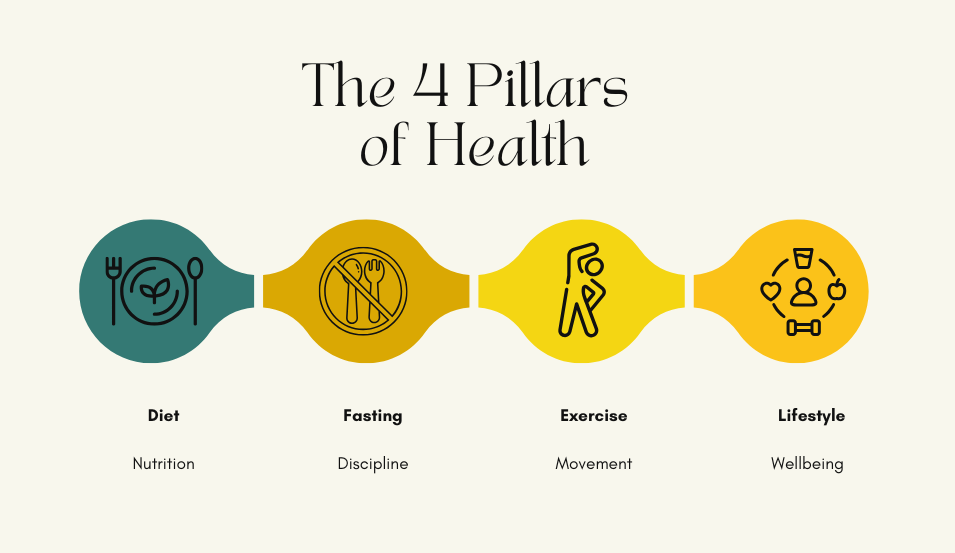
The 4 Pillars of Health: Diet, Fasting, Exercise, Lifestyle
Diet
What you eat forms the foundation of your health.
Fasting
When you eat can be as important as what you eat.
Exercise
Regular movement is vital for body and mind.
Lifestyle
Sleep, stress, sunlight, and social connection.
CHAPTER 2

Diet: Fuel for Optimal Health

Focusing on what is on your plate is the most powerful choice you can make for your health. A whole-foods diet supports weight management, stable blood sugar, better sleep, more energy, and lower disease risk. Frequent processed carbohydrates keep insulin chronically high — driving fat storage, insulin resistance, and metabolic disease.

Prioritise
  • Meat — beef, lamb, poultry, fish, organs
  • Healthy fats — animal fats, avocado, extra virgin olive oil, coconut oil
  • Eggs
  • Full-fat dairy — cheese, Greek yoghurt
  • Non-starchy veg, especially cruciferous — broccoli, cauliflower, kale, cabbage
Minimise
  • Ultra-processed foods & added sugars
  • Cereals, refined grains, breads, pasta
  • Seed oils — canola, sunflower, soybean, vegetable
  • Starchy vegetables (potatoes)
  • Fruit juices & smoothies — whole fruit in moderation is fine

Myth vs Reality

Tap a card to reveal the reality.

MYTH
{{ m.myth }}
Tap to reveal ↺
REALITY
{{ m.reality }}
Practical tips
• Eat whole, unprocessed foods whenever possible
• Keep your eating window to 6–8 hours (e.g. 10am–6pm)
• Stop eating at least 4 hours before bed
• Minimise sugar and high-fructose foods
• Add adequate salt once processed foods are gone
• Choose organic, pasture-raised, free-range when possible
• Cook with stable animal fats; finish with olive oil
CHAPTER 3

Fasting: The Power of When

Possibly the most powerful non-clinical intervention for health. Without food, your body uses stored glucose, shifts to burning fat, enters ketosis, and activates repair processes — from growth hormone release to cellular cleanup (autophagy), stable blood sugar, and improved mood and memory.

{{ f.hours }}
{{ f.name }}
{{ f.benefit }}
Getting started
  1. Choose your fast — begin with 13–15 hours, extend as your body adapts
  2. Track progress — note how you feel; consider glucose/ketone tracking
  3. Stay hydrated — water, black coffee, plain tea
  4. Break it wisely — how you end a fast matters most
Breaking a fast over 24h — 4 steps
  1. Bone broth — repairs the gut lining
  2. Probiotic foods — yoghurt, kimchi, sauerkraut
  3. Steamed vegetables — fibre for good bacteria
  4. Protein — animal or plant
Shorter fasts: break with good fats, protein, liquids, or probiotics.
Safety first: consult a healthcare professional before starting any fasting regimen — particularly with pre-existing conditions or glucose-lowering medication. Break your fast if you feel dizzy, fatigued, or lethargic.
CHAPTER 4

Low-Carb Basics

Starchy carbohydrates digest into surprising amounts of sugar. Cutting them stabilises blood glucose and tames cravings — a typical low-carb day stays under 130g of carbs. Adapted from Dr David Unwin's low-carb diet sheet (2021).
{{ t.h }}
{{ t.b }}
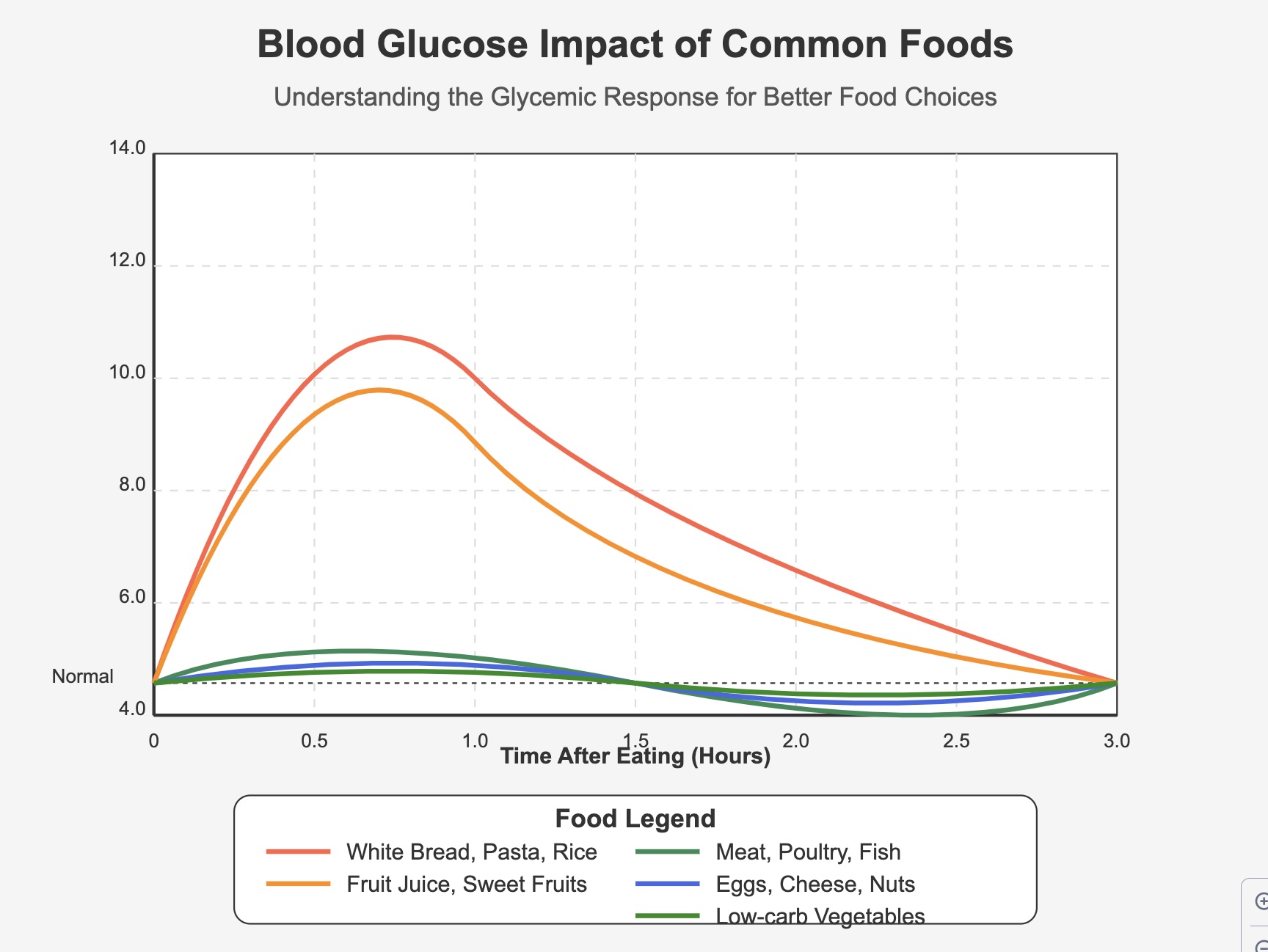
Blood glucose impact of common foods — refined carbs spike glucose; protein, fats and low-carb veg barely move it
Refined carbs and sweet fruit spike blood glucose for hours; meat, eggs, cheese and low-carb vegetables barely move it.
On prescribed medication? Check with your doctor before making big dietary changes — especially diabetes medications that lower blood sugar.
CHAPTER 5

Exercise: Movement for Life

Aim for at least 30 minutes of movement daily, mixing cardio, strength and flexibility — and avoid extended sitting. Benefits go beyond fitness: better mood, sleep, cognition, and reduced risk of chronic disease.

DAY
ACTIVITY
TIME
INTENSITY
{{ w.day }}
{{ w.activity }}
{{ w.time }}
{{ w.intensity }}
Remember: start where you are, not where you think you should be · increase gradually · listen to your body · consistency beats perfection · pick activities you actually enjoy.
CHAPTER 6

Lifestyle: Bringing It All Together

Health is more than diet and exercise — it's how you sleep, handle stress, and connect with others.

{{ l.h }}
{{ l.b }}
Free mindfulness apps: Smiling Mind · Headspace
CHAPTER 7

Reversing Type 2 Diabetes: A Roadmap

Type 2 diabetes is primarily insulin resistance and metabolic dysfunction — and research shows it can often be significantly improved, or reversed, through diet, fasting, movement, sleep and stress changes. This phased roadmap shows the path. Always work with your healthcare provider, especially around medication.
{{ p.when }}
{{ p.h }}
{{ p.b }}
Intermittent Fasting Progression
A step-by-step approach to metabolic healing — progress at your own pace.
{{ s.when }}
{{ s.ratio }}
{{ s.desc }}
Always consult your healthcare provider, especially regarding medication adjustments.
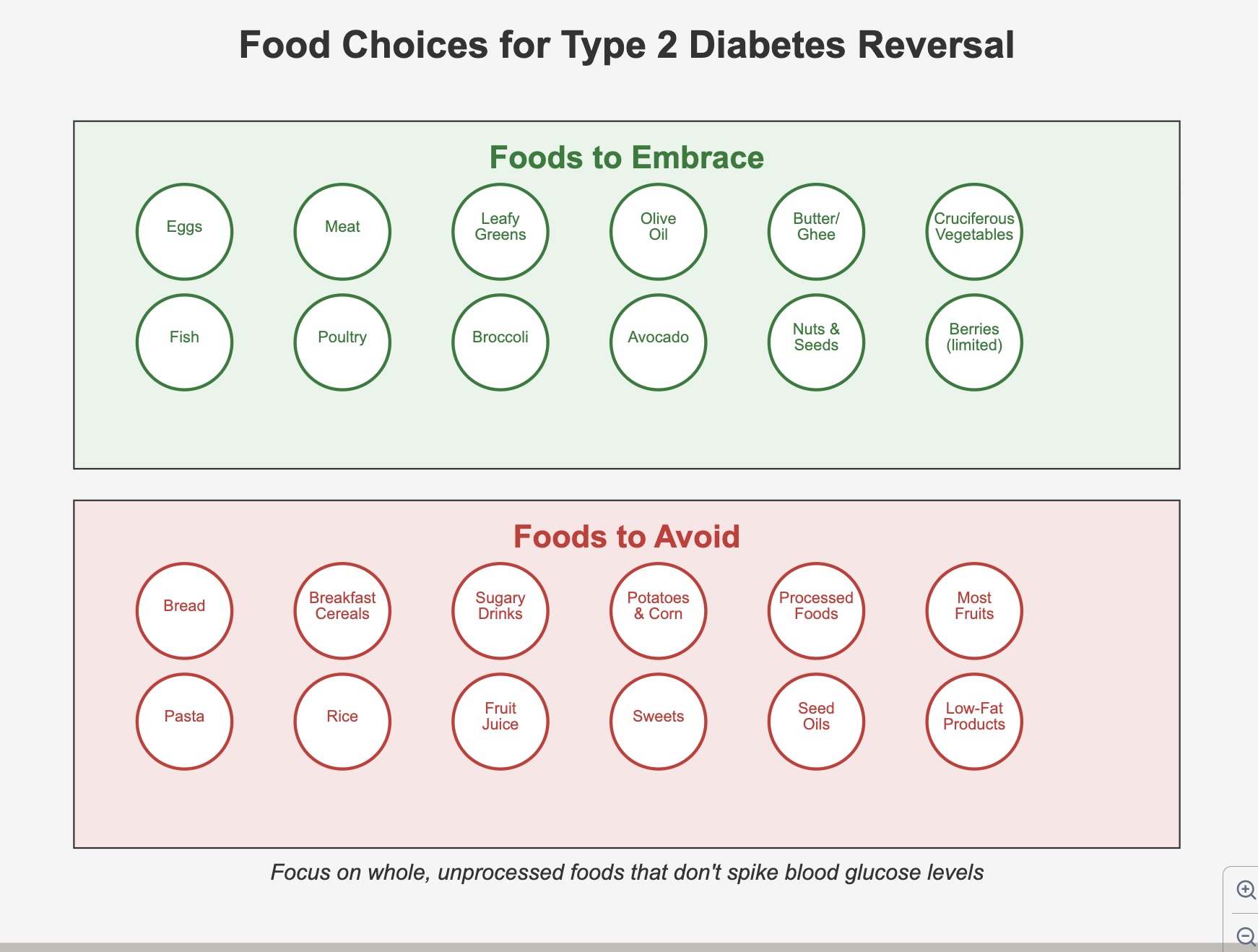
Foods to embrace and foods to avoid for type 2 diabetes reversal
CHAPTER 8

Weekly Wellness Checklist

Print a copy and tick off your daily habits. Small, consistent actions build sustainable health.

DAILY HABIT
Mon
Tue
Wed
Thu
Fri
Sat
Sun
{{ h.name }}
CHAPTER 9

Resources & Support

Mental health support
Lifeline — 24/7 crisis support · 13 11 14
Beyond Blue — 1300 22 4636
Headspace — youth (12–25)
Black Dog Institute — mood disorders
SANE Australia — 1800 18 7263
Kids Helpline — 1800 55 1800
MensLine — 1300 78 99 78
Further reading & research
"The Case Against Sugar" — Gary Taubes
"Why We Get Sick" — Benjamin Bikman
"Why We Sleep" — Matthew Walker
"The Diabetes Code" — Dr Jason Fung
Fasting guidance — Dr Mindy Pelz; low-carb diet sheet — Dr David Unwin (2021)
Contact Sunnysights Health Club
support@sunnysights.com.au · (07) 3088 7935 · sunnysights.com.au
Disclaimer: This guide provides general information for preventative health and wellness. It is not intended to replace professional medical advice, diagnosis, or treatment. Always seek the advice of your physician or other qualified health provider with any questions regarding a medical condition.
{{ pageIndicator }} · use ← → arrow keys to flip chapters